• Skip to primary navigation
  • Skip to main content
  • Skip to footer

Helpful Dentist

Best Dental Tips

  • CE Courses
  • DCP Index
  • Testimonials
  • Contact
  • Login

ErgoPrism Loupes Variable Working Distance

June 23, 2024 By Dr. Greg

Today’s tip is about a subtle but game changing technology. Do you know what a variable working distance is on your loupes?

As many of you know, I tried out multiple brands of ergo prism loupes at the same time, and switched to ergo prism loupes.

It’s been an incredible game changer. My neck pain is gone and my pinched nerve symptoms have almost all gone away in a matter of months!

I want to talk about a feature Lumadent’s loupes have that the other brands of loupes did not have.

Variable Working Distance

So the thing Lumadent has that the other brands I tried did not have is a variable working distance. This is a VERY AWESOME feature.

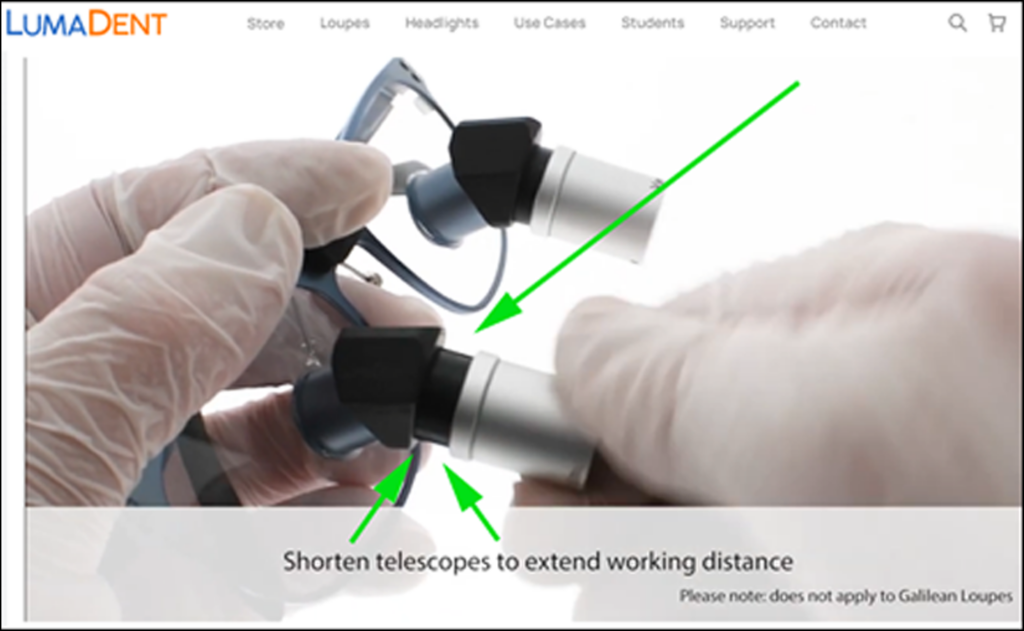
In short, you can turn each loupe lens like binoculars to change the working distance. YOURSELF.

It works by simply turning the focus on the lens clockwise or counter-clockwise, depending on if you want to shorten or lengthen your working distance.

Here is an example of how adjusting the working distance works:
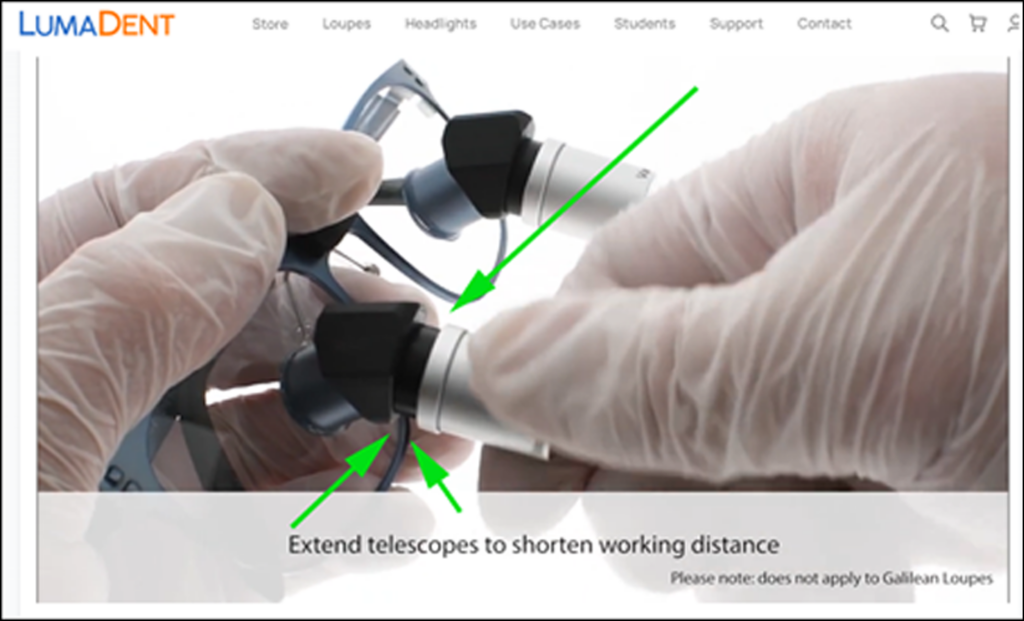
LumaDent Variable Working Distance

LumaDent Variable Working Distance

They also have a good video that shows this here at the 2 minute mark:

The range is impressive. It’s around 12 inches of ADJUSTABALE working distatnce. But the range changes with each magnification.

I’ll tell you why this is so important. There are two reasons:

Fine tuning (reason #1)

The first is fine tuning. I know when you buy loupes the rep gets you all measured up with working distance, but my question is how do you really know?

I remember watching the sales rep in dental school almost have an assembly line of students, slamming almost everyone into a 16-inch working length but that never made sense as there were 5’4″ students and 6’2″ students, but everyone seemed to be getting 16 inches because that was the average.

Well, I know I got my working length at 21 inches, and sent them back twice,ultimately settling on 23″ working length.

The idea is you want your loupes to put you in the position that is most ergonomically comfortable to your body.

Your loupes are NOT supposed to put your body in a non-ideal position that is not ergonomically ideal to your body.

LumaDent Variable Working Distance

The point I’m making is your sales rep can (should?) get your working distance close. But do you really know? I don’t.

In my personal case, after trying Lumadent’s ergo loupes, I learned I like to sit my patient lower than I anticipated. Instead of sending my loupes back, waiting 6+ weeks, I simply turned some dials, played around a little bit, and got my loupes / patient positioning into a more comfortable position. Took m a few days, but I got my patient positioning really dialed in, and a BIG reason why I feel my back and neck pain has gone away.

So having that ability to fine tune your working distatance an additional 10-12 inches AFTER you get your loupes is a game-changer.

And this game changer does NOT go away. Which leads me to my second point.
LumaDent Variable Working Distance

Long-Term (reason #2)

The variable working distance is an incredible hedge.

While Lumadent’s pricing was the most affordable of the ergo loupes brands I tried (by over $1,000) changing loupes when eye prescription changes is EXPENSIVE.

Even if you do not wear corrective lenses, it is well known eyes change around 40-45 years old. Especially with all the time spent on smart phones and computers in this modern age.

I checked with my optometrist friend and he confirmed that due to the loupe’s high magnification if my glasses prescription changes I can simply change my working distance on my loupes and that should be sufficient.

So having Lumadent’s variable working distance feature it also helps protect against eyeglasses prescription changes.

LumaDent Variable Working Distance

Two questions:

Now I get asked two questions a lot, and I admit I had the same questions myself.

People often ask me about the weight of the loupes. While they look heavy, ergo prism loupes are NOT heavy. In fact my Lumadent loupes are the lightest loupes I have ever worn.

The other question I get asked a lot is does it take a long time to adjust to ergo prism loupes? For me it was 2-3 days and by the end of the week I was fully dialed in.

What I recommend when switching to ergo prism loupes is to start off only doing hygiene recalls and occlusal fillings. Stick to simple stuff at first. But I found it easy and a quick process to adjust to ergo loupes.

Summary

So the reason why I am going into such depth on a variable working distance is because I do not think a lot of people are aware of. I actually bought my Lumadent loupes NOT even knowing I could adjust my working distance. And Lumadent was the ONLY loupe brand I tried out that had this feature.

So in short, a variable WD lets you accomplish two things:

(1) you can fine tune your ergonomic position AFTER you get your loupes to be even MORE dialed in for a better ergonomic position.

(2) you save money on future prescription changes, by being able to adjust your working length.

Complete game changer. I think every dental student and every dentist should be in ergo prism loupes. It is my opinion these loupes help save backs in pain on seasoned dentists, and prevent neck pain from happening in dental students.

I know I’m glad I switched.

Click here to learn more about Lumadent ErgoPrism Loupes today.

I hope these tips are helping.

To your success,

Dr. Greg (aka “The Helpful Dentist”)
Filed Under: Helpful Dentist Insider Tips

Locating MB2 Tips

September 7, 2018 By Dr. Greg

Every month I include a part of my “how to get good at endo” series.

It’s a 12-part series, and these tips are exclusive to the Insider’s Group.  This is NOT shared on facebook, so I appreciate you being an Insider.

So endo is tough.  MB2, MB3. They exist, and they do need to be instrumented.
Before I start, to address the MB2 naysayers, I’ll show you a few cases I’ve completed over the years.

5 canal c-shaped lower 2nd molar

5 canals in a lower 1st molar

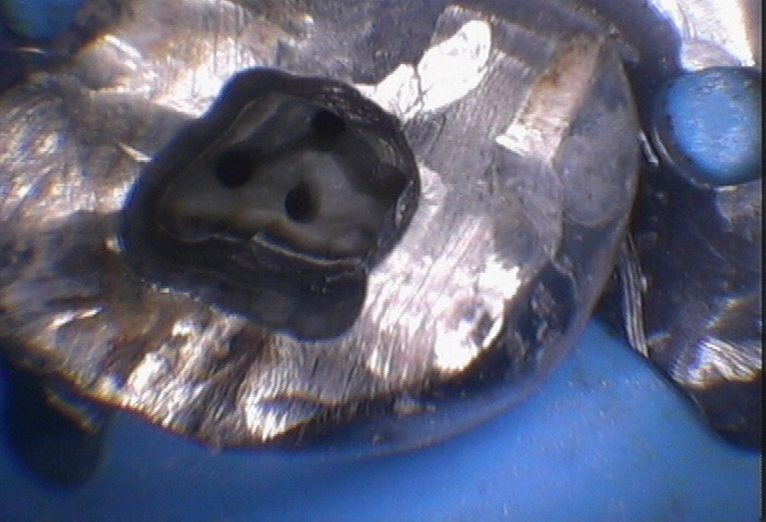
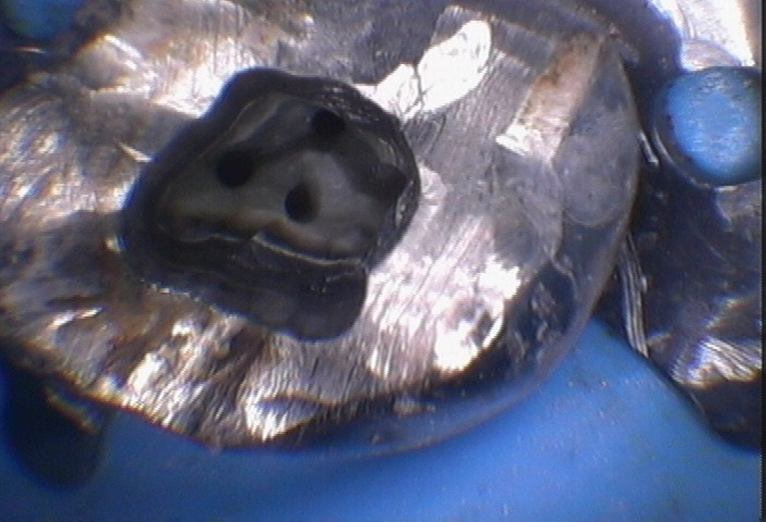
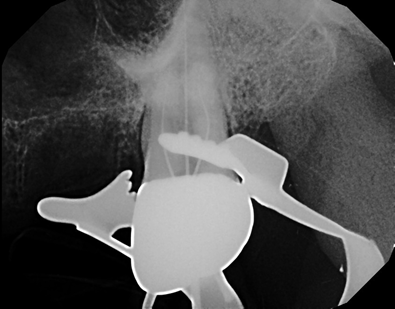
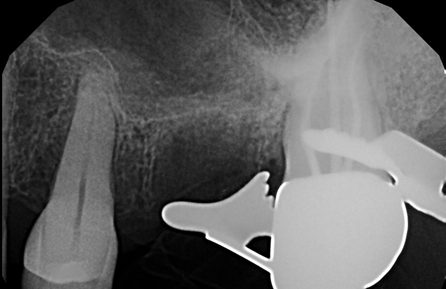
Mb2 in a upper 2nd molar through a crown

MB2 on an upper first molar

So my point is, extra canals do exist and they are out there.

The easiest way to find extra canals

There is no substitute for magnification and imaging.  So the ideal setup would be a microscope and a CBCT.

Now I understand that not everyone has access to that.  I completely get it.  I receive a lot of emails from solo practitioners in more rural areas, or those in health clinics where the patients have zero appreciation for seeing a specialist.

So ideally, get yourself a microscope and CBCT.

If you would like to refer to the CBCT reference thread linked below, there is a great resource here.  Look through the comments. The members posted real images (not stock images) and discuss the various CBCTs and if they’re happy with them:

CBCT reference thread: https://helpfuldent.ist/2NE4NVD

For the rest of us, I will share with you some techniques on how to find MB2 without a microscope.

Get a light and magnification

If you do not have a scope and CBCT, I recommend a very bright LED light and loupes.  At least 3.3 magnification (most of these cases were done at 3.3x) but I recently switched to 4x with a very powerful light.  I’m considering switching to 5x or 6x for my endo.

Takes some time to get used to, but the visibility is much better.  Remember, the higher the magnification, the more powerful light you need.

Exploring with the explorer?

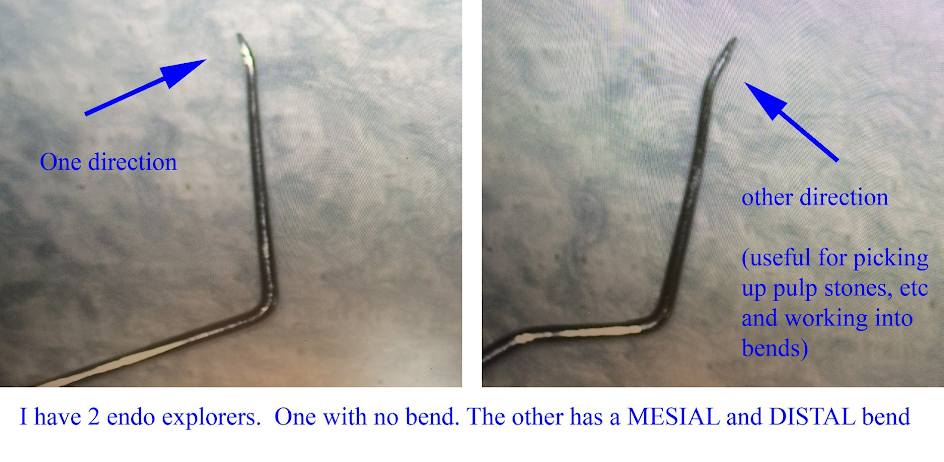
I personally am not a big fan of the endo explorer.  I find them too big for small canals.  That’s me, personally.

I use my endo explorer to pick out pulp stones

If you’re interested, here is a tip I wrote on how to modify your endo explorers: https://www.facebook.com/groups/DentalClinicalPearls/permalink/178500069450369/

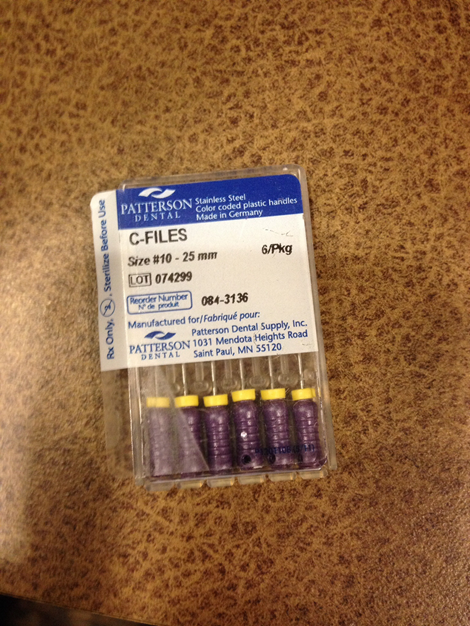
So instead of using my endo explorer, I prefer to use files.  Usually 8 c-files, sometimes 10 c-files, and for the “bonus canals” it’s often a 6 c-file.

How I find MB2

A lot of it is how I hold my hand files.

The first thing to know is, I rarely hold endo hand files with my hands!

I’m not joking.

I rarely hold the hand files in my fingers.

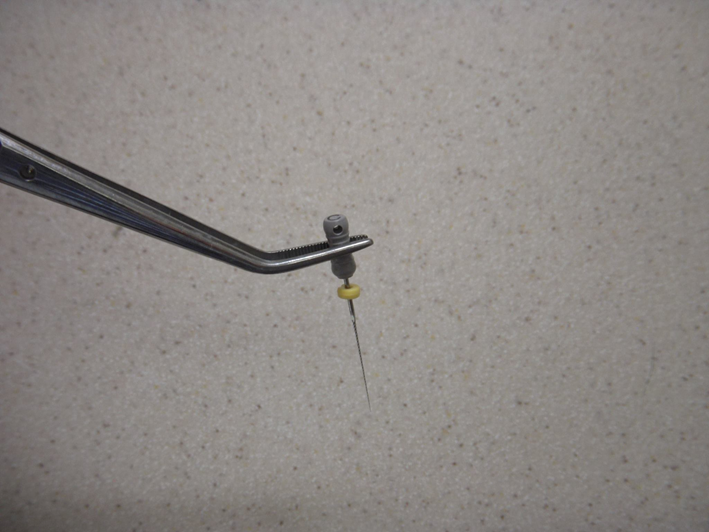
Instead I use locking pickups to hold the hand files.

Why locking?

Well it’s one less thing to think about.

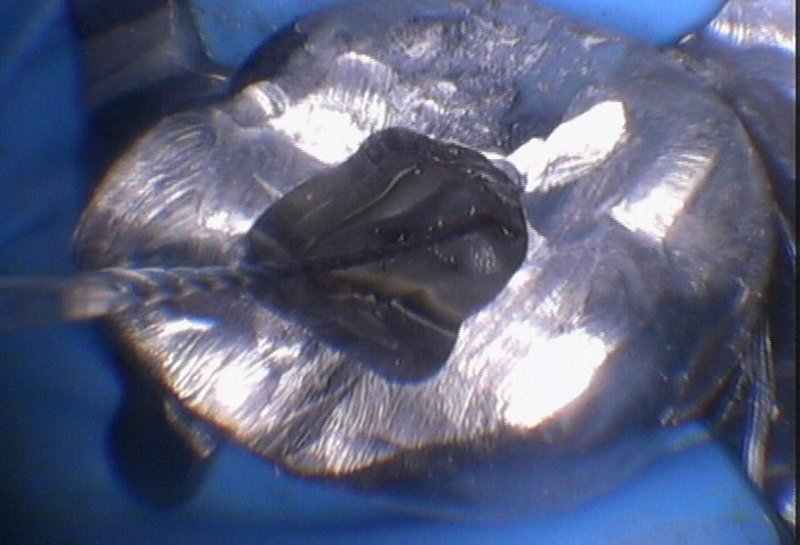
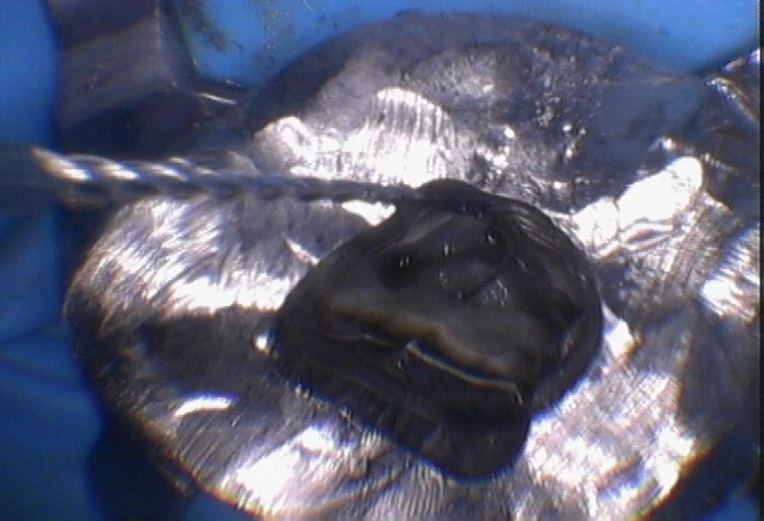
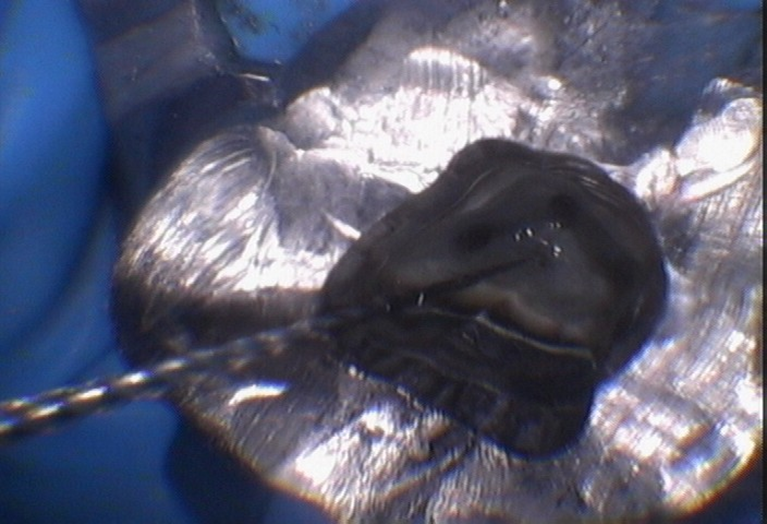
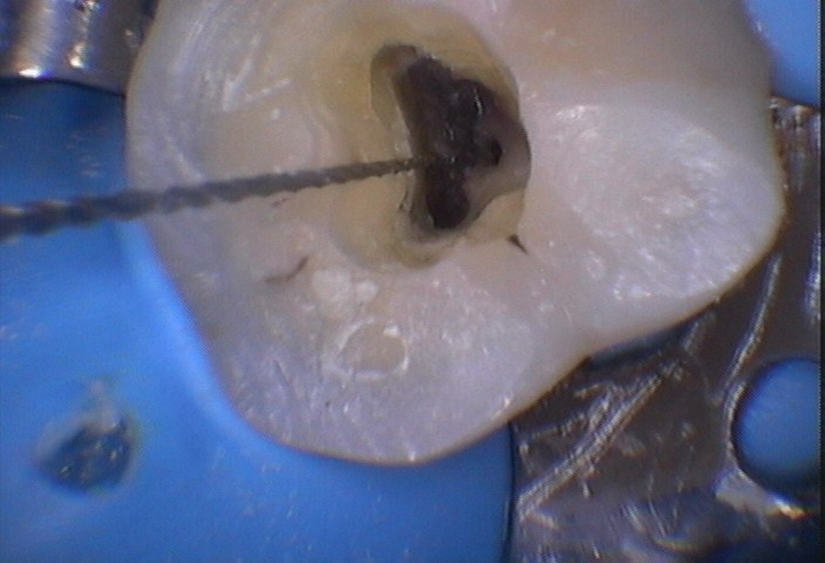
Here is an example of how I use endo hand files to be my “explorer”.

Locating the DB

MB located

MB2 located

Here is the MB, MB2, and DB visible, palatal is off to the side from this angle.

So this is how I hold my hand files.  It’s awesome.  Give it a go sometime.

I rarely recommend brands, as often many brands of an instrument or material do the job.  I only recommend specific products or brands when it is a game changer, but I will say this.

Avoid the really cheap locking pickups.  I found they wear out too quickly.  I went with a brand-name locking pickup and they have held up, as well as have an excellent exchange policy.

Shorter files

I also find using 21mm files on posterior teeth helps me a lot.

If you’re an associate, and your boss won’t buy you a full set of 21mm files, get the 6, 8, 10, and 15 HF’s in 21mm.  Once you get past a 15mm hand file, at 21mm, you can switch to a 25mm and be fine with larger canals.

Not all cases can use 21mm files, but most do, and this leads me to my next point.

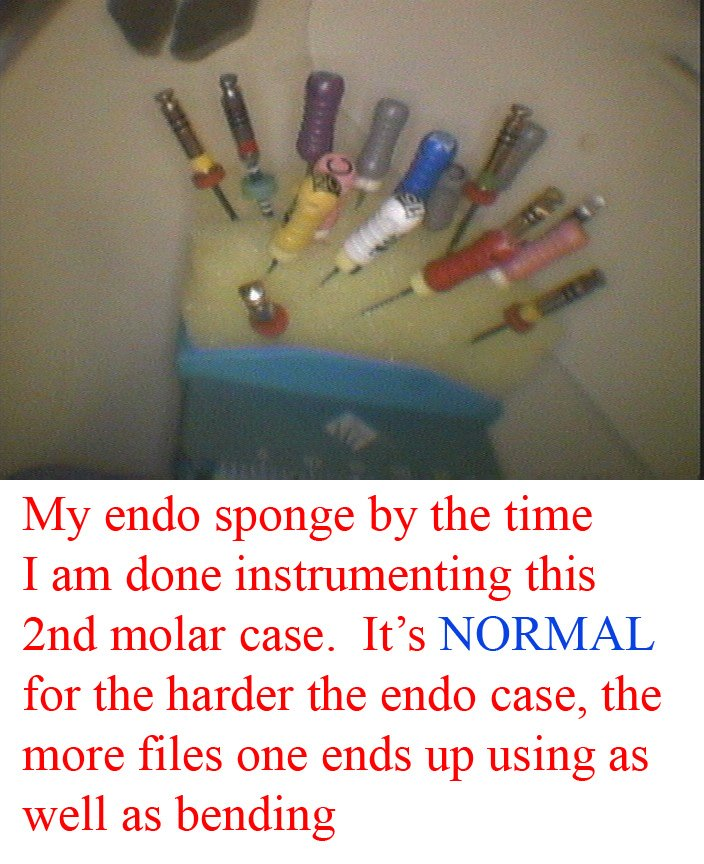
It’s normal to bend files

I did a post on this there, which you can read, but know that it’s normal to bend HFs while looking for additional canals.  Nobody is immune to this.  It happens

Here is a post where you can read more on finding calcified canals here:  https://www.facebook.com/groups/DentalClinicalPearls/permalink/259947221305653/

Flatten the cusps

This is a BIG tip.  Really helps me a lot.

By flattening the cusps on posterior teeth, I get more accurate file measurements, as well as protect the tooth before the patient can receive a crown.

Flattening the cusps typically brings you into the 21mm or under range too, meaning you can use shorter files that are easier to manage.

Another benefit is, with the cusps gone, there is less difficulty placing hand files in canals, and I can see better.

So by flattening the cusps you have improved visibility, more accurate file measurements, more protection for the tooth and all you did is start the next step of a procedure the patient should receive anyway (crown prep). It makes sense to me.

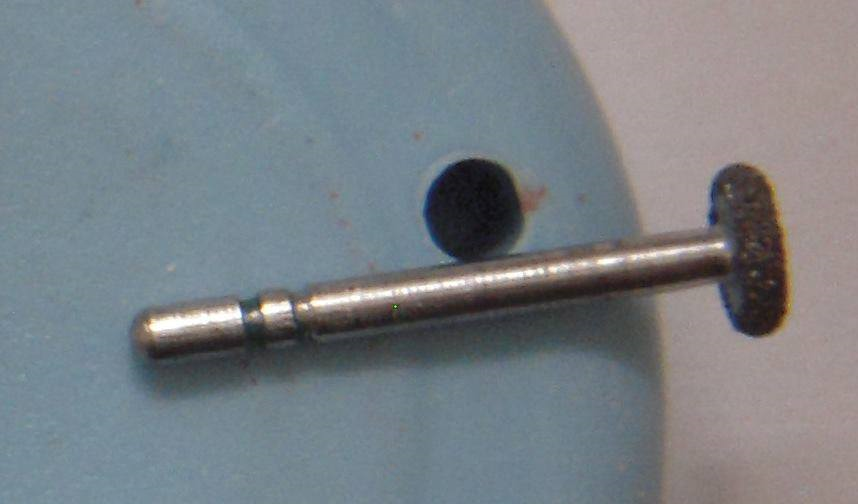
I use the diamond wheel to flatten the cusps, and then typically an egg diamond (football) to round the edges a little.

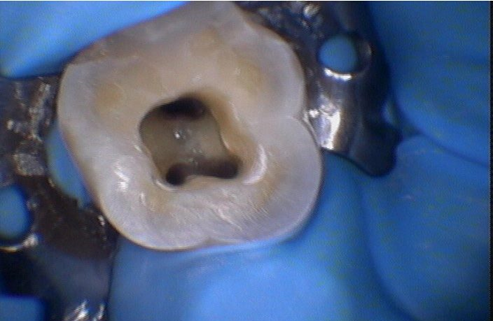
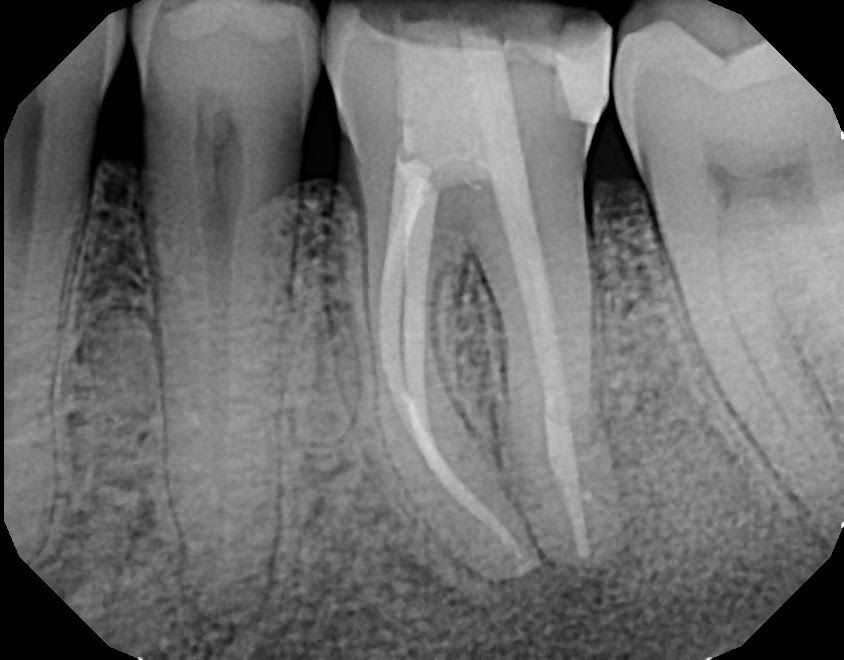
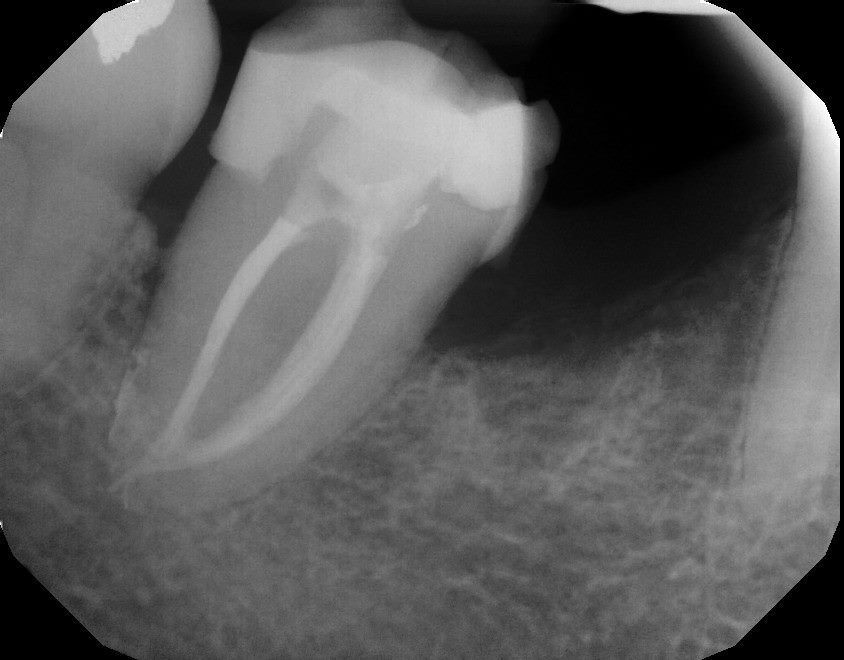
Here is a clinical example and radiographic example of the type of reduction I’ll do.

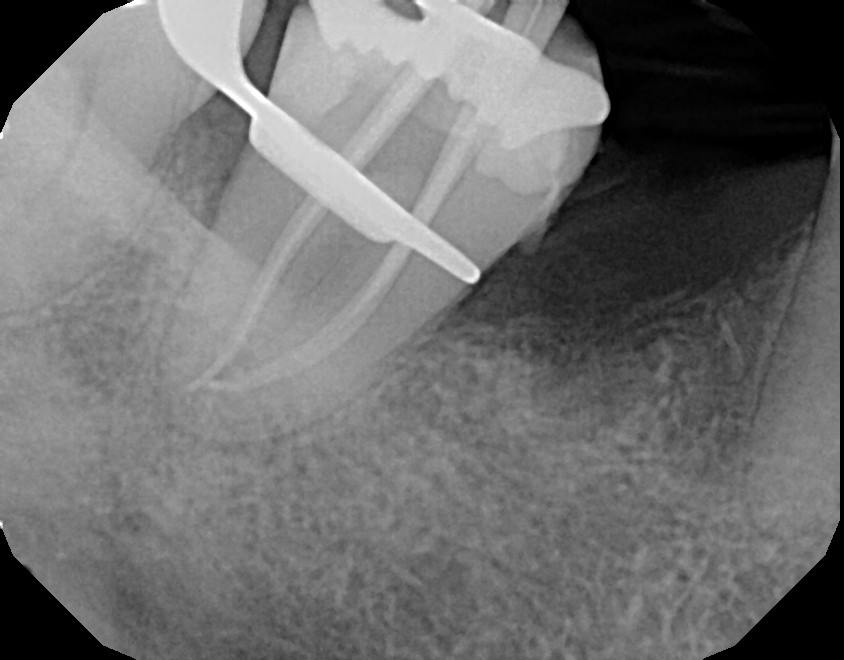
This lower 1st molar had 5 canals.  Here is the final obturation.

Instrumented 4 canals and then troughed in mid-mesial because the area looked suspicious

I like c-files

I’m a big fan of c-files.  It’s personal preference. I find k-files too bendy and C+ files are too stiff.

ANY brand of c-files is great.  I’ve tried a number of different c-files.  I suggest using the most cost-effective / biggest promotion of a c-file and buying them in bulk.

That’s my personal opinion, but I find c-files are easier to use in my hands than k-files.  Especially on tight canals like MB2s.

Bleach and ETDA

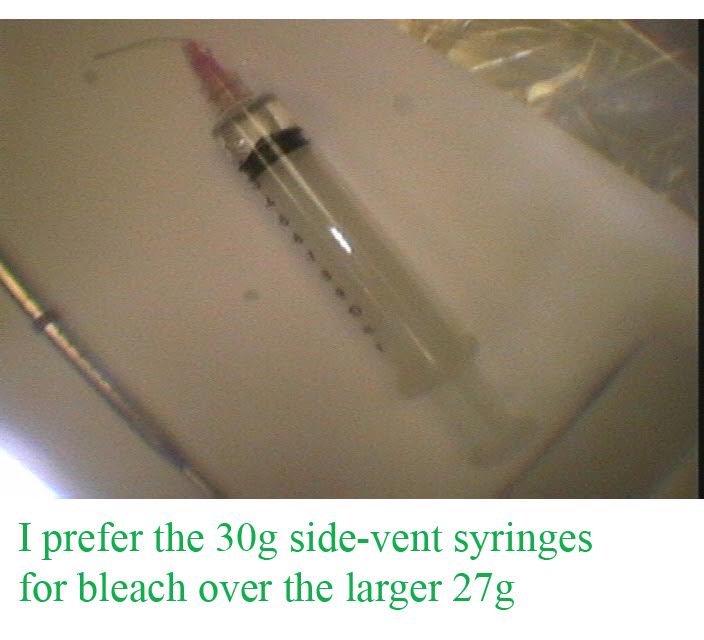
I like to flood the chamber with bleach or EDTA.

I use a lot of bleach.

If the decay is a class II, I will build up the proximal box in composite, so I can flood the bleach in the chamber and get additional contact time or disinfection time.

It’s empiric, and purely something I noticed, but I seem to find the MB2s a lot easier after the chamber has been sitting in bleach and EDTA for 20-30 minutes.

Sometimes I get lucky and find the MB2 right away

But what I usually do is I locate my main canals (say MB, DB, P), and instrument them while the chamber is flooded in bleach.  Then once I’ve got those canals finished, I continue to look for MB2.  Often the bleach and EDTA time helps uncover the extra canals.

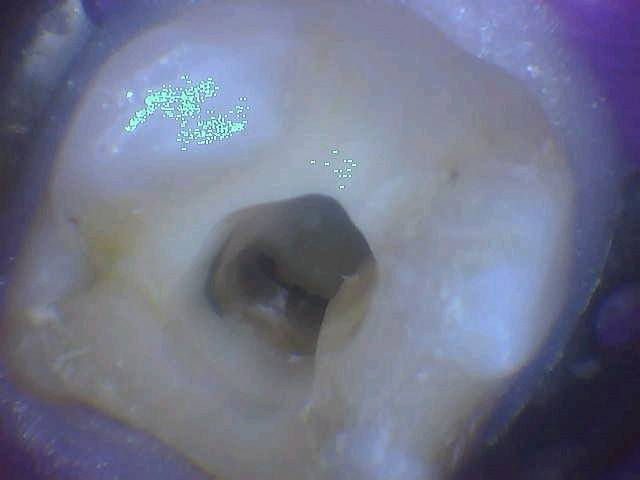
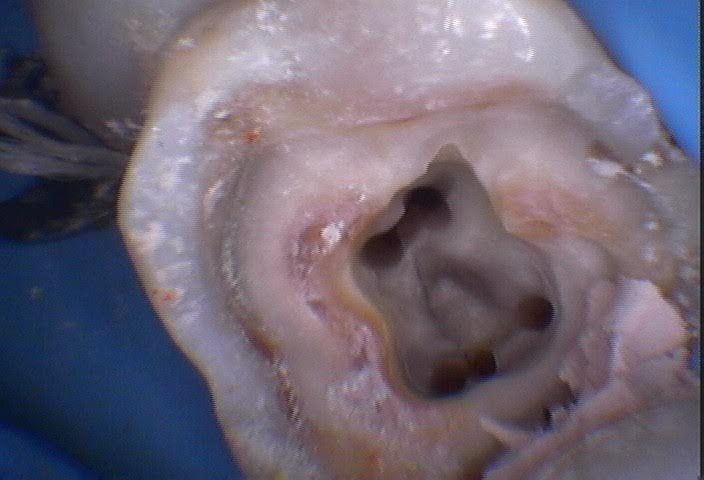
Here is a case where I located the MB, DB, and P, and then went searching for the MB2

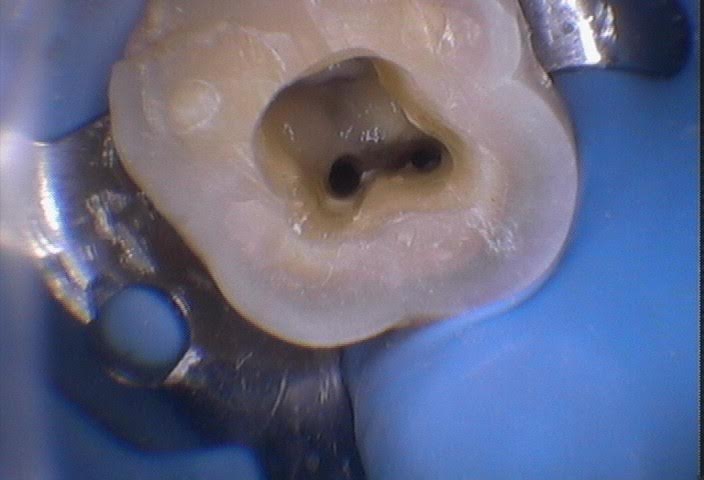
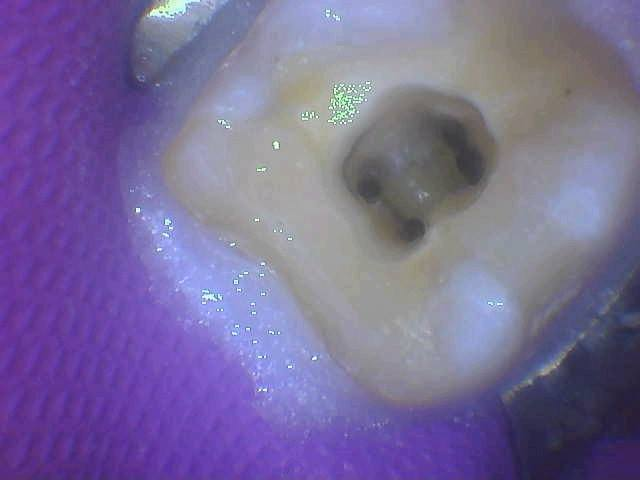
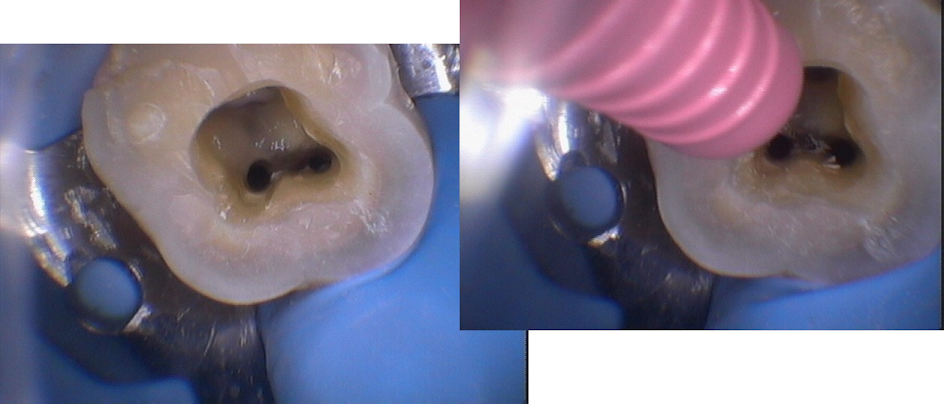
So pictured at this point is MB, DB and P that has instrumentation complete before I even start to look for MB2.

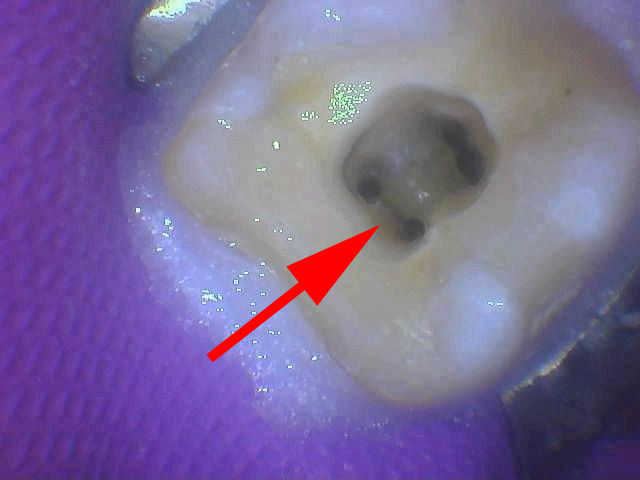
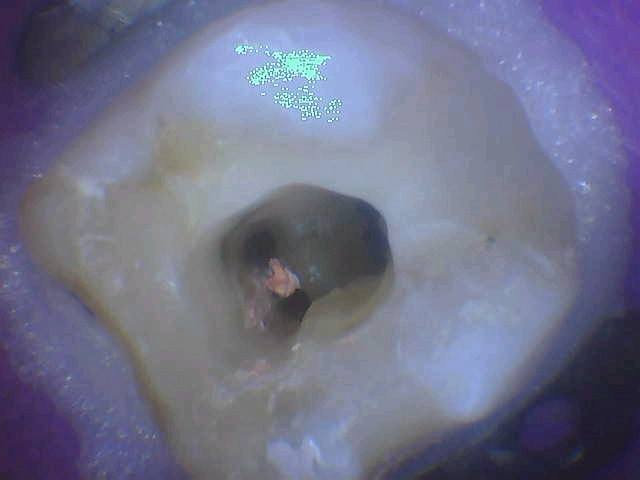
Found the MB2 with a 6 HF.  Pictured here is after I instrumented the area to an 8 and placed a 10 c-file in there.

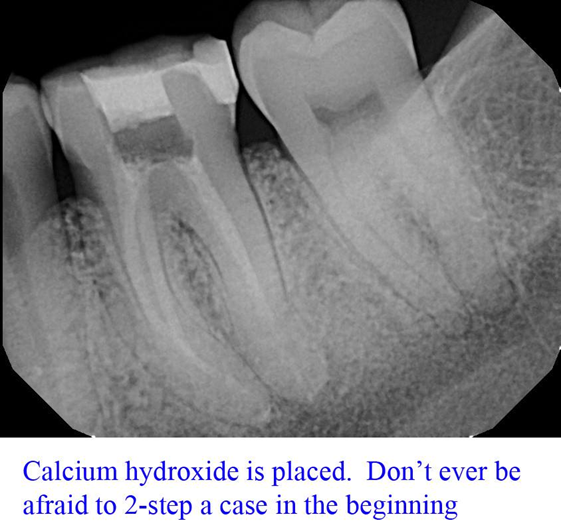
After instrumenting the MB2 as well and ready to take the calcium hydroxide (I was two-stepping this case)

Take your time, especially at the start

Why not book your endos in two 90 minute appointments.  Offer to the patient to send to end, let them know you’ll be longer, and do your cases in calcium.  I’m a simple GP and I still do a number of my cases in 2-steps for endo on molars.  Nothing wrong with that.

While patients appreciate efficiency, dentistry is not a race.

Giving yourself more time lets you get the hang of locating MB2 and where to look.

You can always offer to do the crown prep the day of obturation.  Patients love that convenience.

Trough suspicious areas selectively

You cannot be afraid to look.  Use caution and good radiographic analysis and pay attention to furcations.

Find a full-unroof of an area is important to do.  I will give you an example

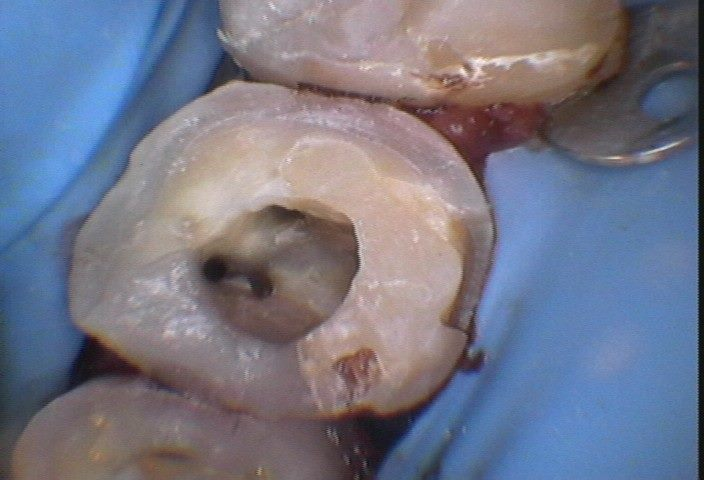
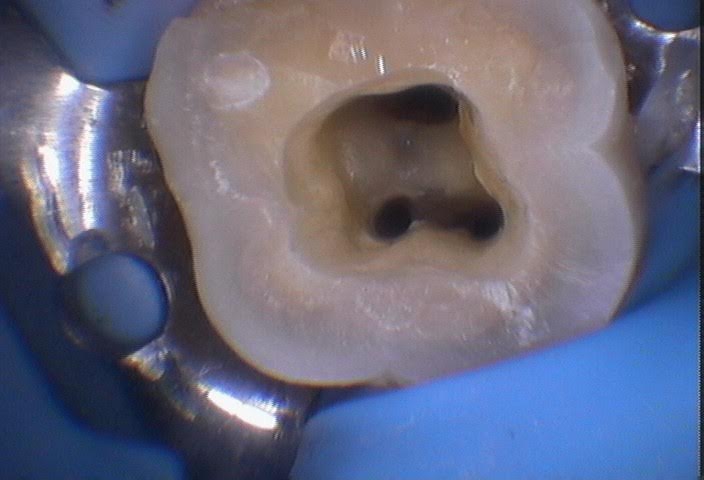
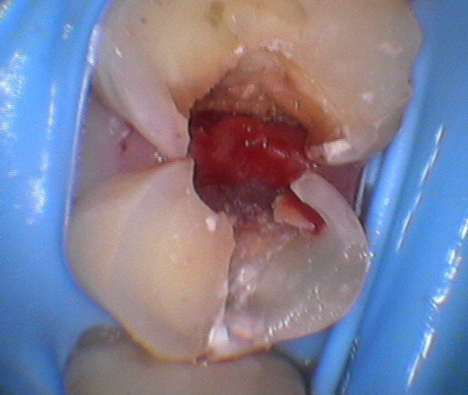
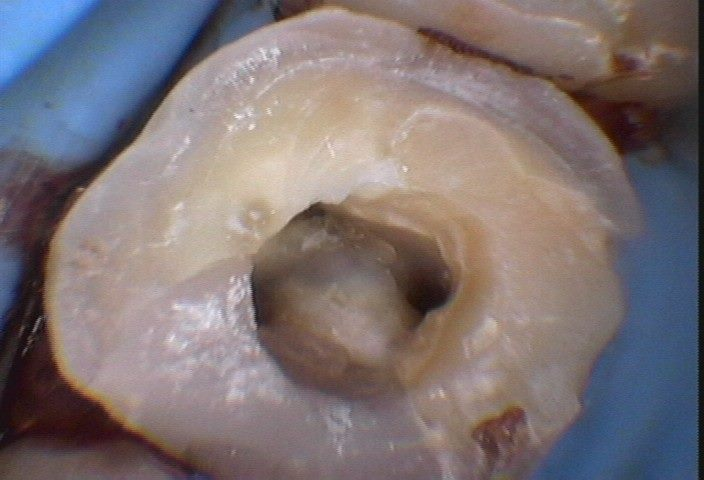
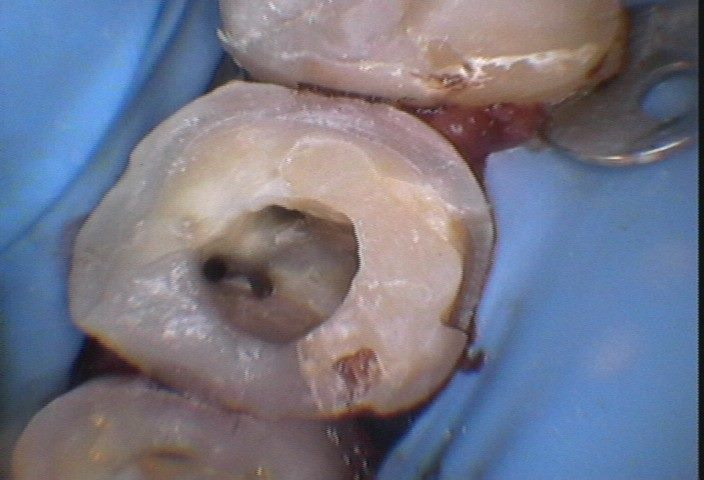
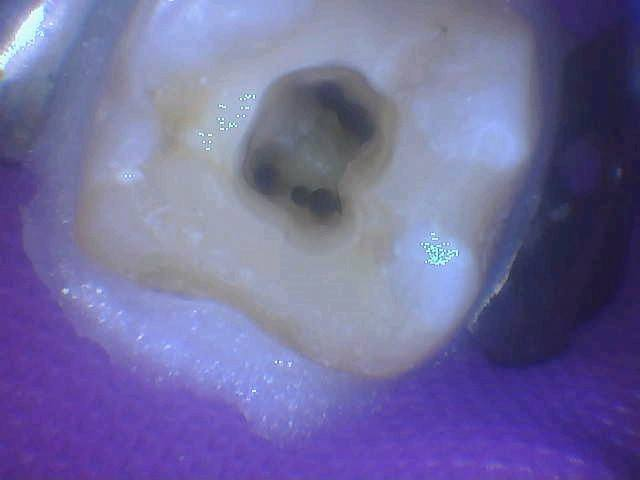
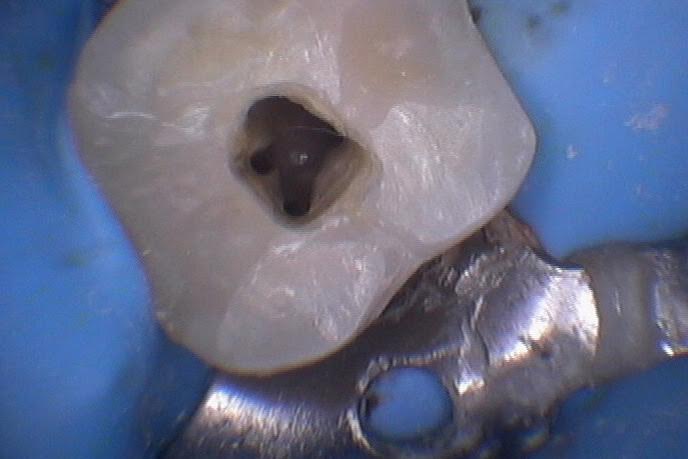
Accessed this tooth. Here is the initial access

I instrumented the MB, ML, DB and DL canals.

But I don’t like the line between the MB ad ML region.

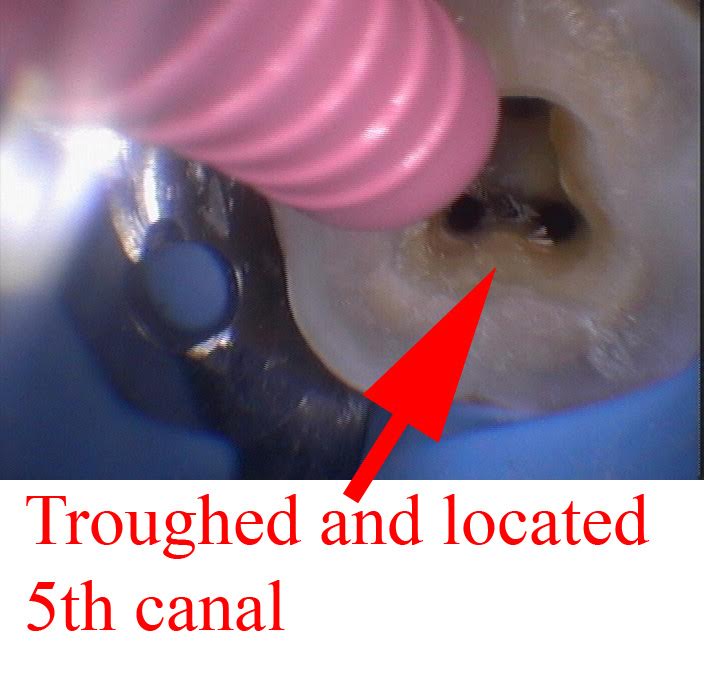
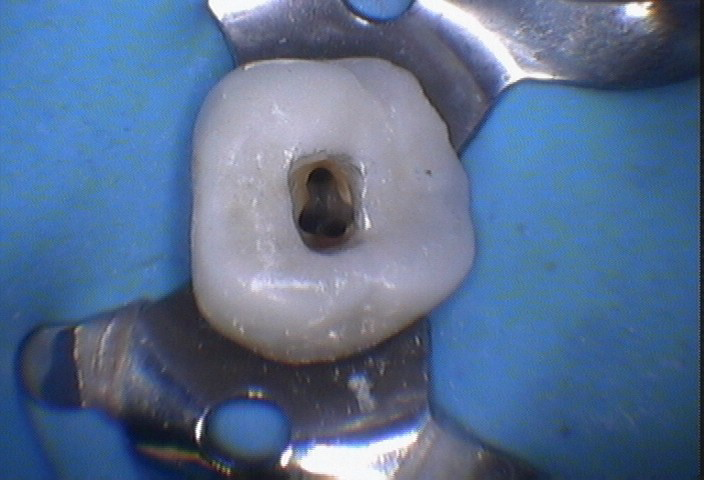
So I trough there with my ultrasonic.  I used to use the diamond that looks like a crown prep diamond, but these days I would use the small ball to gently look.

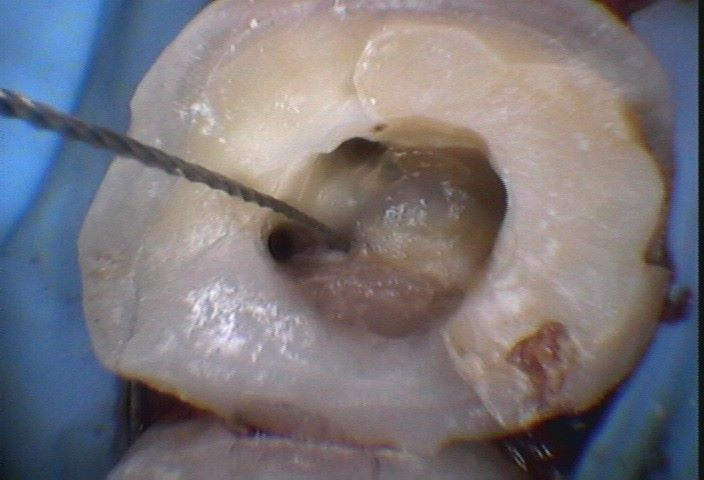
Then I start to search with my locking pickups and a 6 or an 8 c-file

Boom. Success!  This photo is after instrumenting the 5th canal.

A lot of time these extra canals join, but in this case the mid-mesial canal did not join, so I obturated it first to to make obturation in the ML and MB first.

Here is the master-cone shot.

Final obturation:

Close or far

Know that the extra canals can be very close together or very far.

Here is an example of the canals being further apart.

Here is a different case where canals are much closer together. Of course, it’s through a crown on this one.  The weird canals are always when doing it through a 2nd molar crown.

So what I’m saying is this:

In dental school they taught me a certain distance from the MB is where to find the MB2.

Yes, technically the research shows a higher prevalence of MB2 in a particular location, but you have to prepare yourself to look everywhere.

Ultrasonic or small bur

Getting an ultrasonic helped me a lot.

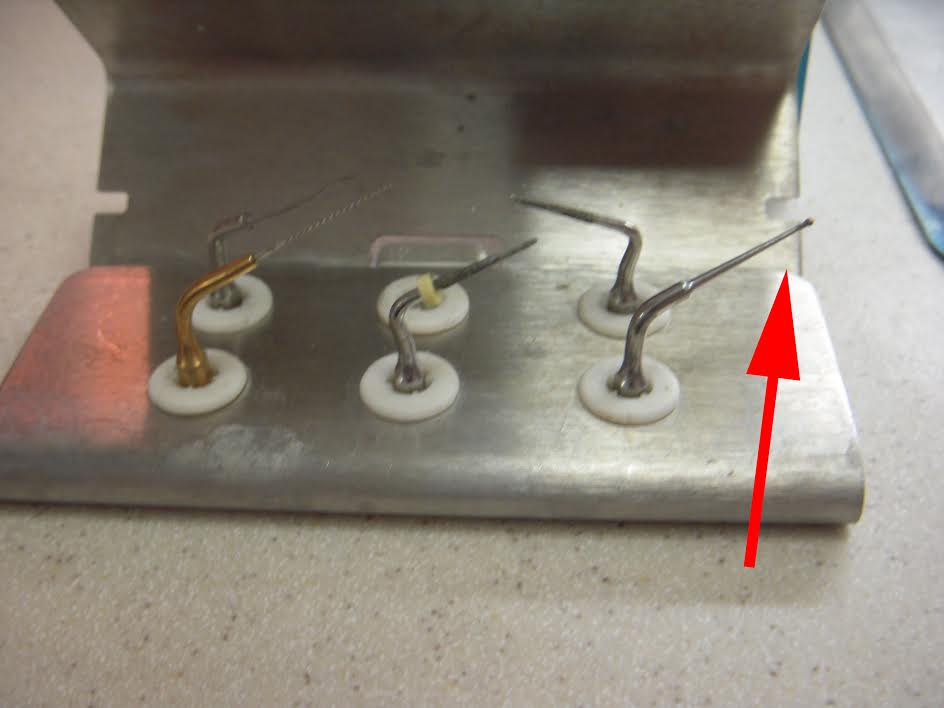
If you do not have an ultrasonic, consider getting a #1/2 round or #1 on a surgical length slowspeed, and you can selectively trough.

The surgical length, purely because it’s a longer shank, and you can see more around it.

Personally I don’t know how I did endo without an ultrasonic.

I am not saying that the slow speed bur is the same as the ultrasonic.

I find the ultrasonic works better in my hands, but a slowspeed bur can be used to trough.

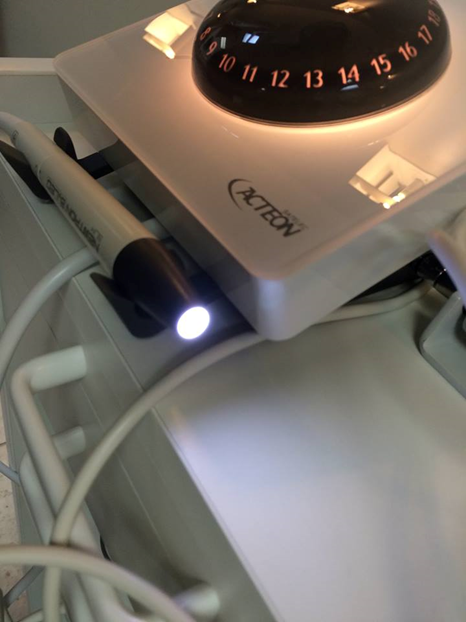
I have a Newtron P5, but there are a LOT of great models out on the market.

I am not recommending Acteon’s model, but I recommend you get an ultrasonic.

If you end up getting the Newtron do not bother paying extra for the LED.  I did, but it was a waste of money.  Doesn’t improve any viability.

The most important thing in finding MB2

The biggest thing of all is to go looking.

If you see a fin, if you see something suspicious, try to guide a hand file file down there.

Place the file in the canal and unlock the pickups.

I’ll give you some examples

Here is an MB2

Here is a MB, ML and a mid-mesial

You gotta start putting 6 and 8 files down these areas and exploring for them.  You’ll feel yourself get sucked in, and then watch wind down.

I hope that these tips are helping.

To your success,

Dr. Greg (aka “The Helpful Dentist”)
Filed Under: Helpful Dentist Insider Tips

Join The Private Facebook Group:

  • Email
  • Facebook
  • Instagram

Copyright © 2026 · helpfuldentist.com · All Rights Reserved · Privacy Policy · Terms of Service · Contact